
Long before Boys’ Love (BL) games were readily available on Steam, itch.io, the Nintendo Switch, or mobile app stores, English-speaking fans had to work hard for their romance.
The early internet was the wild west for BL localization. Fans scavenged LiveJournal communities, hunted down sketchy fan patches, or imported physical PC discs that required their own guides to install. Many of us watched a late-night anime adaptation first, only to realize years later that the source material was actually an 18+ visual novel. For others, the lore of these games were hidden behind drama CDs, scattered CG galleries, and word of mouth from bilingual fans on forums.
That is the strange, lingering afterlife of early-2000s BL visual novels. Many were never officially localized, yet they fundamentally shaped the landscape of BL gaming. They pioneered how commercial BL properties could branch out into anime, novels, and merchandise.
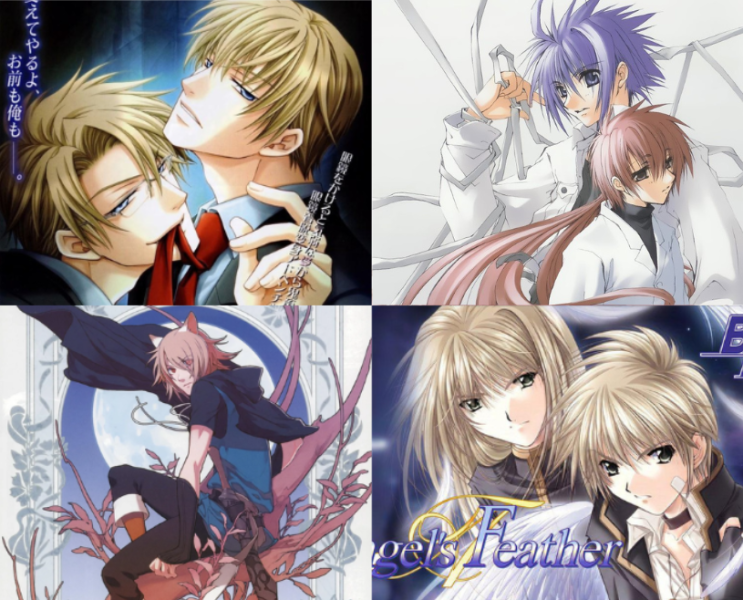
Today, four titles stand out from that era as lost artifacts that still warrant an official English release: Lamento -BEYOND THE VOID-, Suki na Mono wa Suki Dakara Shou ga Nai!! (better known as Sukisho), Angel’s Feather, and Kichiku Megane.
Some birthed massive multimedia franchises, while others remain beloved cult classics kept alive purely by the devotion of older fans. All four make a compelling case for localization today. This is true not just for the sake of nostalgia, but because they each preserve a distinct, vital chapter of BL history.
Lamento -BEYOND THE VOID-: The Prestige Classic
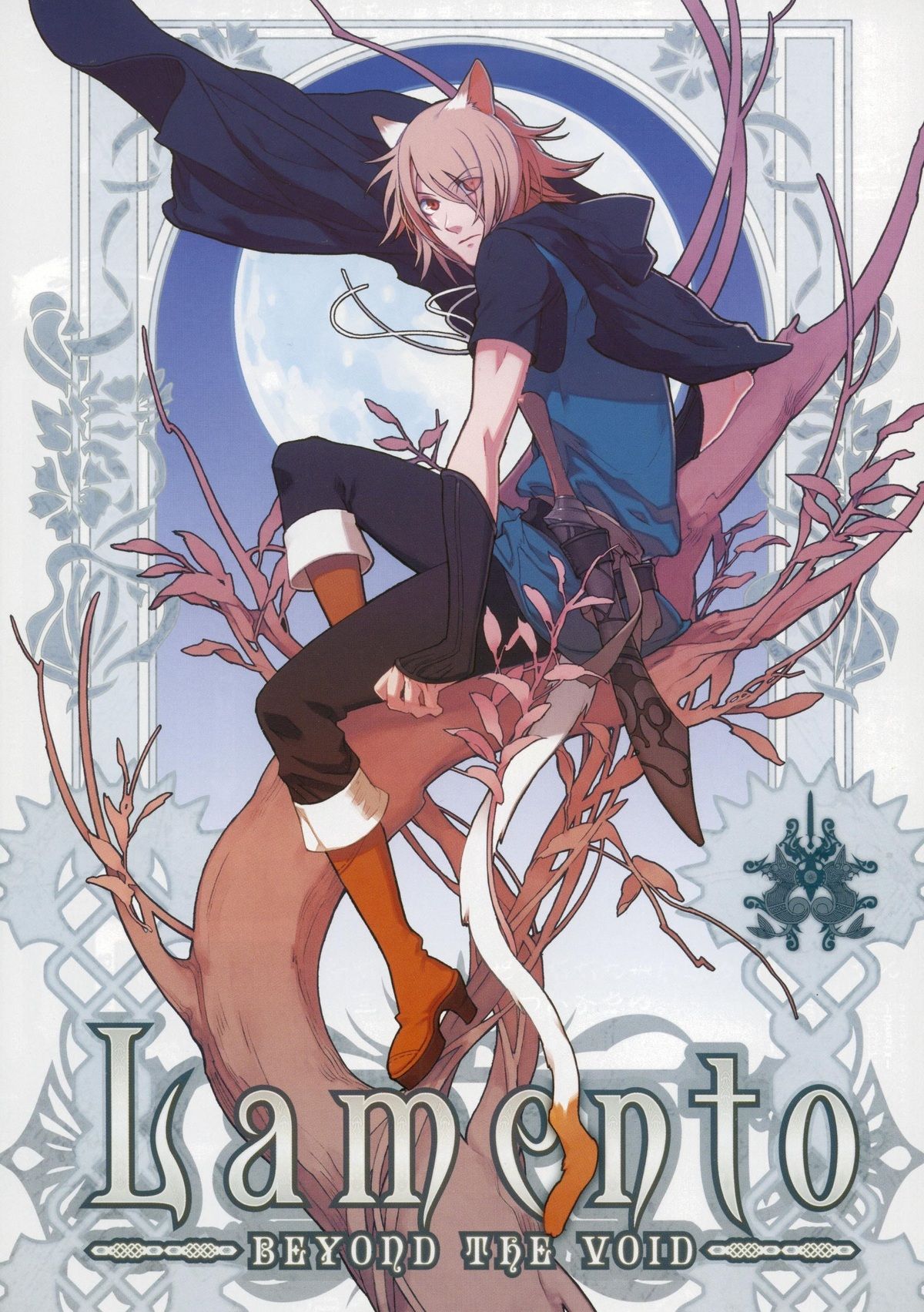
Released by Nitro+CHiRAL in 2006 and later rereleased in a Windows 10-compatible version, Lamento is a fantasy BL adventure game set in Sisa, a dying world inhabited by the Ribika, a race of humanlike people with cat ears and tails. Its protagonist, Konoe, lives alone in the village of Karou, where the mysterious phenomenon known as the Void has pushed the land into famine, fear, and cannibalism. When black curse-like markings appear on Konoe’s body and his ears and tail turn black, he leaves his village and begins traveling toward Ransen in search of a way to restore himself. The game explores a world coming apart and a species losing its future. Its fantasy setting gives the game a scale that many older BL visual novels did not attempt: villages, tribes, demons, ruined landscapes, rituals, music, hunger, violence, and bonds formed while moving through a world that feels doomed.

Music is also central to why Lamento still feels distinct. Nitro+CHiRAL’s official materials emphasize the game’s world, graphics, and music as part of its appeal, and that is exactly how many older fans remember it. They are part of the setting’s emotional language, especially through the idea of voices, resonance, and bonds between characters. That is also why Lamento has had such a long official afterlife. Nitro+CHiRAL has continued to treat it as one of its important catalog works. The title received fifth-anniversary activity, drama CD material, fan-book culture, and commemorative projects. In 2024, its official visual fan books and the hardcover novel Lamento -BEYOND THE VOID- expiatio were revived as ebooks, with the fan books collecting CGs, previously released illustrations, interviews, setting art, staff commentary, and new written or illustrated material. The novel is especially useful for understanding the title’s lasting appeal because it retells part of the story from Rai’s point of view, making one of the game’s most popular emotional routes into a separate reading experience. Merchandise is still being pushed to this day.

Furthermore, the English-speaking demand is well documented. Publisher JAST BLUE previously announced an official English release, though the project was unfortunately postponed. The audience is already there, waiting for the chance to experience this premium piece of BL history. Two decades later, Nitro+CHiRAL fans are still waiting for a localization, longing for the moment when their connection to those iconic 2006 CGs comes full circle.

Kichiku Megane: The Transgressive Cult Hit
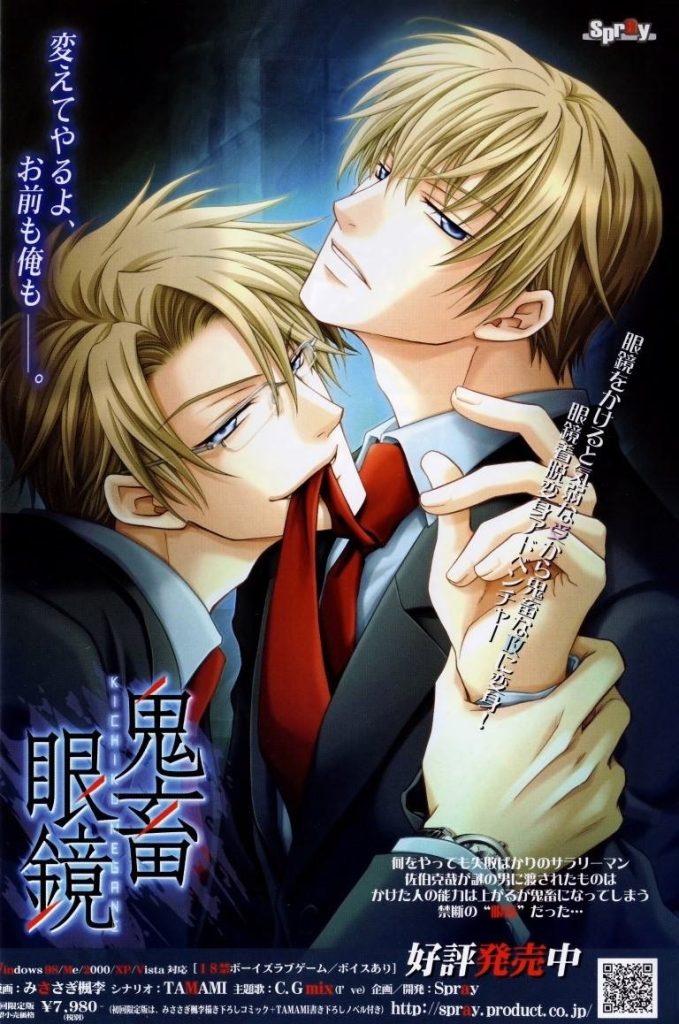
Released by Spray in 2007, Kichiku Megane has one of the simplest and most immediately marketable premises in early BL game history: office worker Saeki Katsuya receives a mysterious pair of glasses from a man named Mr. R, and the glasses change not only his confidence but the entire balance of power around him.
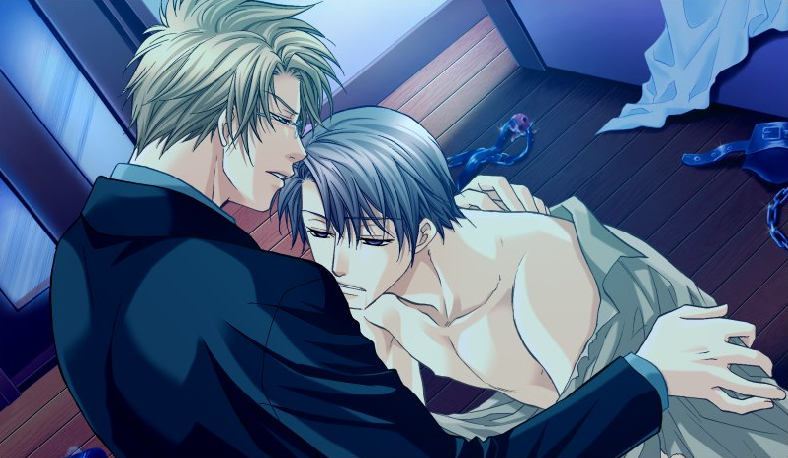
That premise is still compelling. Katsuya begins as a struggling salesman at Kikuchi Marketing, stuck in the company’s underperforming Sales Section 8 with his friend and coworker Honda Kenji and section chief Katagiri Minoru. After a failed work situation leaves him drinking alone, Mr. R appears and gives him the glasses. Once Katsuya puts them on, his life begins to reverse course. He becomes sharper, more aggressive, more sexually dominant, and far more willing to manipulate the people and systems that once made him feel powerless. The glasses turn Katsuya into a weaponized version of himself. Normal Katsuya is polite, restrained, and emotionally closed off; glasses Katsuya is forceful, arrogant, and often dangerous. The game’s central tension comes from the fact that both versions are still Katsuya. The fantasy is not only transformation, but the release of everything he has spent years suppressing.

The route structure also gives the game a very specific identity. Among the main love interests, Midou Takanori and Honda Kenji are especially important because they have both normal-Katsuya and glasses-Katsuya routes, allowing the game to completely flip the power dynamic depending on whether Katsuya approaches them as himself or through the glasses. The other routes move differently, often pushing Katsuya to confront weakness, dependency, old wounds, or the life he has tried to keep emotionally flat.
The fandisc, Kichiku Megane R, is more sweet, exploring the aftermath, which was nice for players who felt that the original routes were more about impact, domination, and psychological rupture. The fan disc also deepens the importance of Sawamura Noritsugu, the figure tied to Katsuya’s childhood trauma and the emotional root of why Katsuya became so careful, distant, and unwilling to stand out.

At the same time, the extremity is part of why Kichiku Megane remains so memorable. Older fans do not remember it only because of the glasses gimmick. They remember the opening, the character reversals, the office setting, the route discourse, the fan disc, and the way Katsuya’s transformation made the game feel immediately recognizable even among other adult BL titles of the late 2000s.
Sukisho: The Foundational Title Anime-Only Fans Never Got In Full
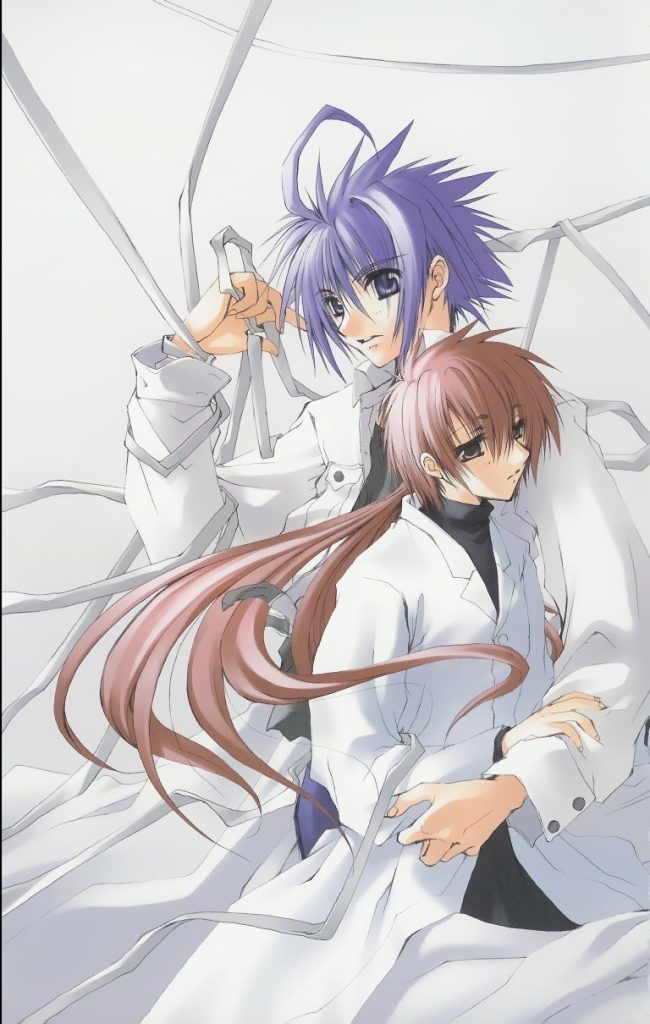
Sukisho may be the most historically important title of the four, but its localization case is also more emotional than that. For many older English-speaking BL fans, Suki na Mono wa Suki Dakara Shou ga Nai!! is not remembered first as a PC game. It is remembered as the 2005 anime: the dorm room, the fall from the school building, Sora’s lost memories, Sunao arriving as his roommate, the strange appearance of Yoru and Ran, and the particular early-2000s feeling of watching a BL anime when there were still very few of them available. The anime gave many fans their first contact with Sukisho, but it was only one version of a much larger work.
The original game series began in 2000 with First Limit and continued through Target Nights, Rain, and White Flower. Across those PC releases, PS2 ports, drama CDs, novels, music releases, radio material, and the anime, Sukisho became one of the clearest examples of how early commercial BL could expand into a full media franchise. Japanese reference sources have described it as the first commercial 18+ BL adventure game, and its TV anime remains an important milestone for BL’s move into televised animation. But the anime could not contain the whole structure of the games.
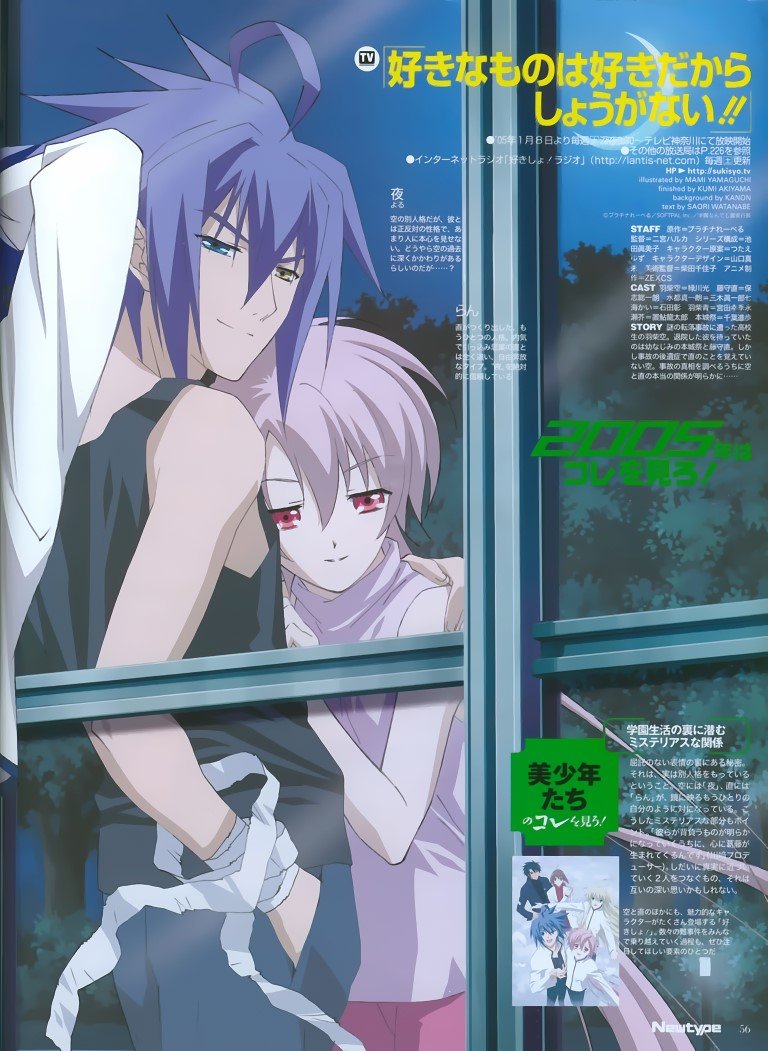
That is the real reason Sukisho deserves an English release. The anime establishes the core emotional tone through Sora and Sunao, Yoru and Ran, memory loss, split personalities, childhood trauma, and the darker truth behind the school comedy surface. However, the game operates on a completely different dynamic. It lets the player move through alternate endings, side relationships, route-specific revelations, and emotional possibilities that a short anime adaptation can only gesture toward. That’s important because Sukisho is not only about one couple. Sora and Sunao are the heart of the story, but the franchise is full of relationships that orbit, mirror, complicate, or deepen that central bond. The games and related materials give more room to characters such as Matsuri, Shinichiro, Nanami, Minato, Soushi, Hiromu, Gaku, Kai, Nagase, and the alternate-personality dynamics surrounding Yoru and Ran. Some routes push the mystery and trauma plot forward. Some lean harder into romance. Some let side characters become more than the familiar faces anime viewers remember from the dorm, school, or supporting cast. That is what anime-only fans never fully got.
In the anime, characters like Matsuri, Nanami, Shinichiro, Gaku, Kai, Nagase, Sei, and others are present, but the limited runtime keeps many of them closer to supporting roles within Sora and Sunao’s story. The games are where those relationships are explored. They can become route material, alternate emotional outcomes, side-pairing texture, or additional pieces of the larger mystery. Even when a route is not as polished as the main story, it still shows what Sukisho was as a BL game: not a single fixed romance, but a branching web of attachment, trauma, comedy, desire, and melodrama.
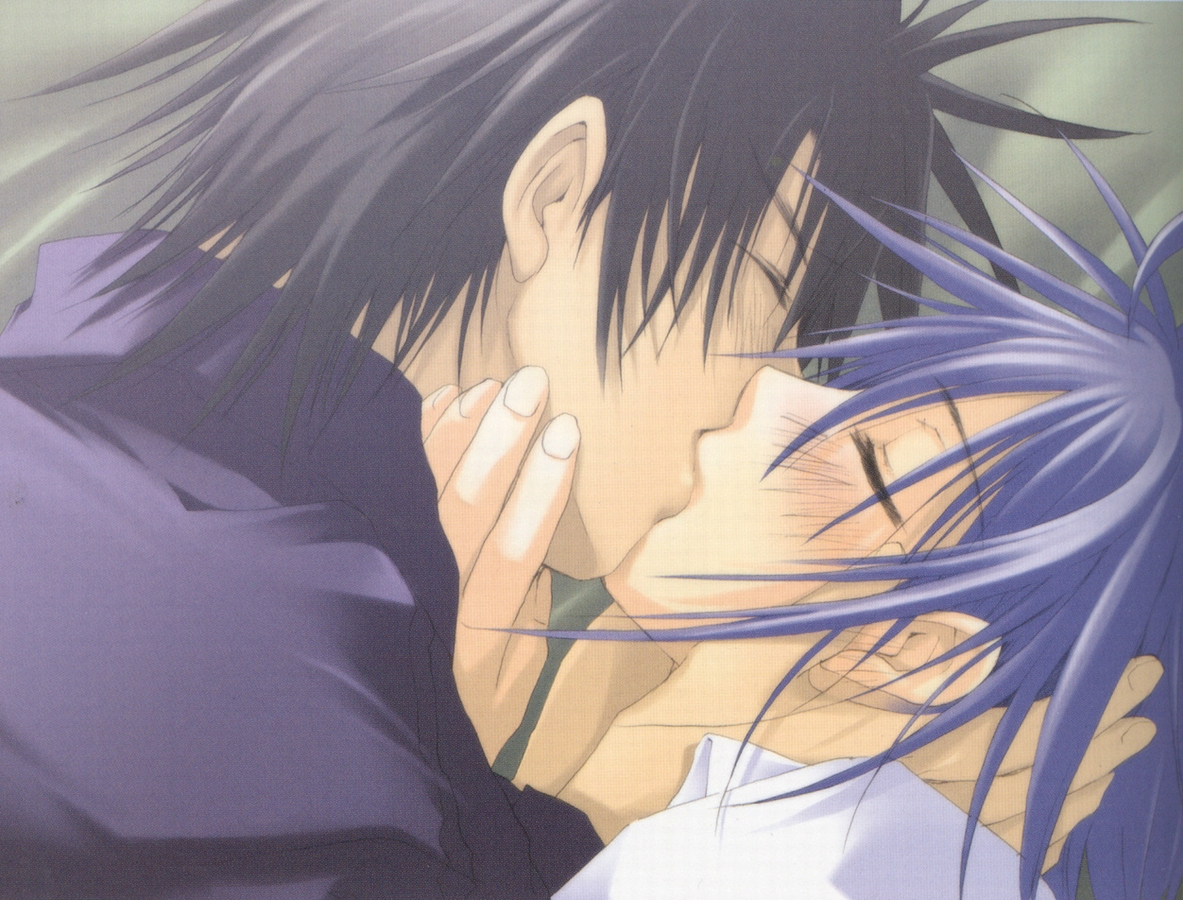

That branching quality is especially important because Sukisho came from a period when BL games were still inviting audiences to explore the boundaries of the medium. The player was not just watching Sora recover his memories. The player was choosing which emotional thread to follow, which relationship to prioritize, and which version of the story to uncover. That is a completely different experience from watching the anime’s condensed version of events. For fans who revisit the anime now, that gap becomes more obvious. Sukisho is nostalgic, but nostalgia can also make a viewer aware of what they missed. The opening, the voice cast, the early-digital color palette, the dorm-room comedy, the hidden trauma, and the almost chaotic tonal shifts are all part of why people remember it. But the anime leaves behind the feeling that there was more story underneath it, because there was.
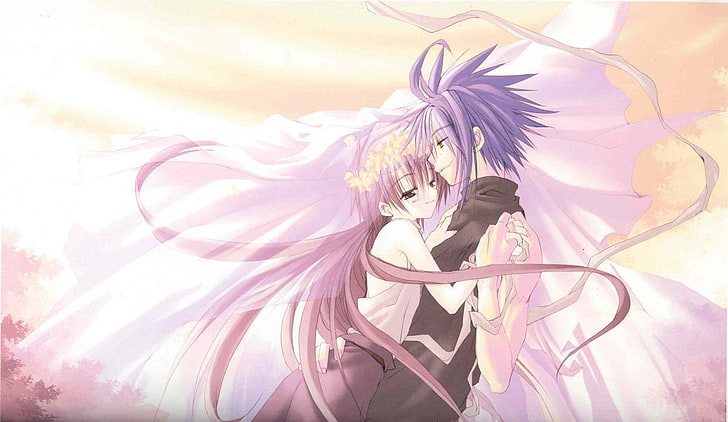
An English release of the games would finally give anime fans a way to experience the source structure instead of only its adaptation. It would let them see the routes that were compressed, skipped, softened, or left unexplored. It would also give newer BL fans a clearer understanding of why older fans talk about Sukisho as more than a quirky nostalgic anime. For older fans who first found Sukisho through the anime, an English game release would not just be another localization. It would be a chance to return to a formative BL work and finally see the parts that never made it to television.
Angel’s Feather: The BL VN/RPG Hyrbid
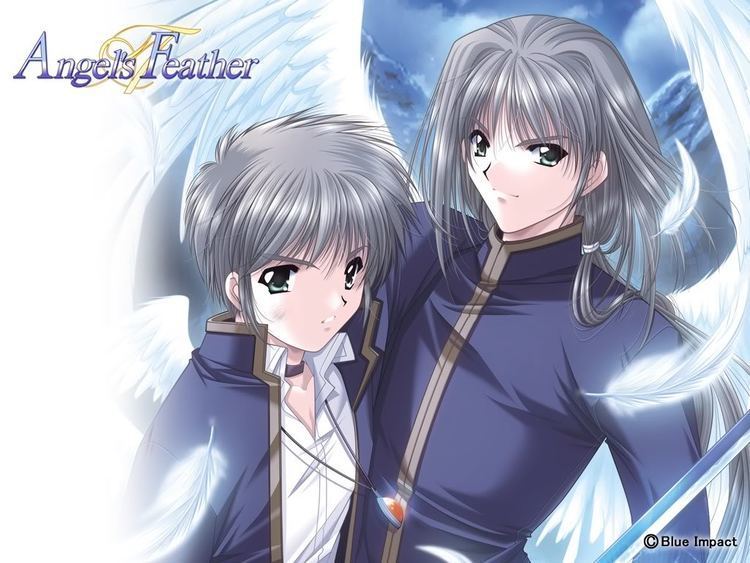
Released by Blue Impact in 2003, Angel’s Feather is a fantasy BL adventure RPG set between an all-boys school and the winged kingdom of Winfield. Its central story follows Shou Hamura and Kai Misonou, separated twin heirs whose reunion at Yuusei Academy opens into a larger conflict involving white wings, black wings, magic, royal bloodlines, hidden memories, and a fantasy world pressing against the school setting. That setup already makes Angel’s Feather feel different from many early BL visual novels. It is not only a school romance and not only a fantasy game. It is both at once: boys in uniforms, dorm rooms, and school relationships on one side, then wings, royalty, battle, magic, and another kingdom on the other.
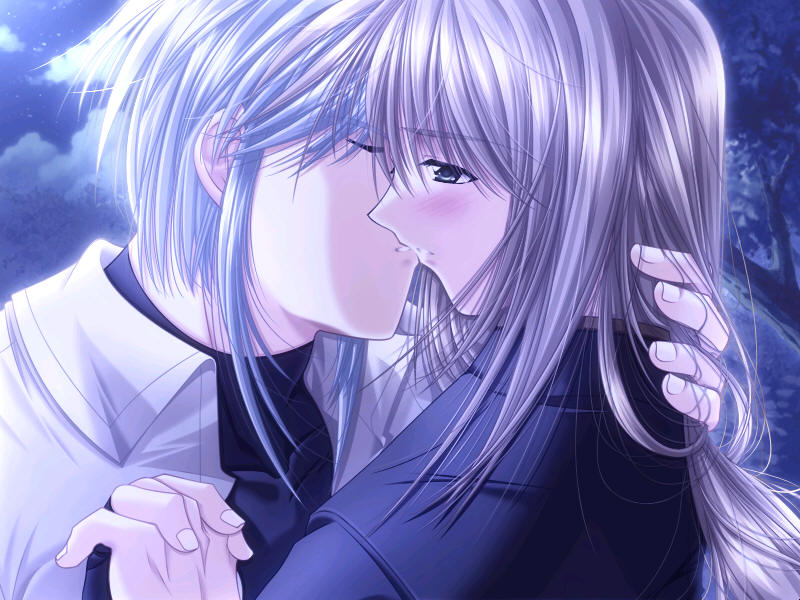
The art is a huge part of why it still stands out. Kazue Yamamoto’s character designs have the glossy, sharp, highly stylized look that now reads as pure late-90s and early-2000s internet anime nostalgia: jewel-colored eyes, delicate faces, long lashes, feathered hair, ornate fantasy details, and boys who look designed to become avatars, forum icons, and Nightcore thumbnails.

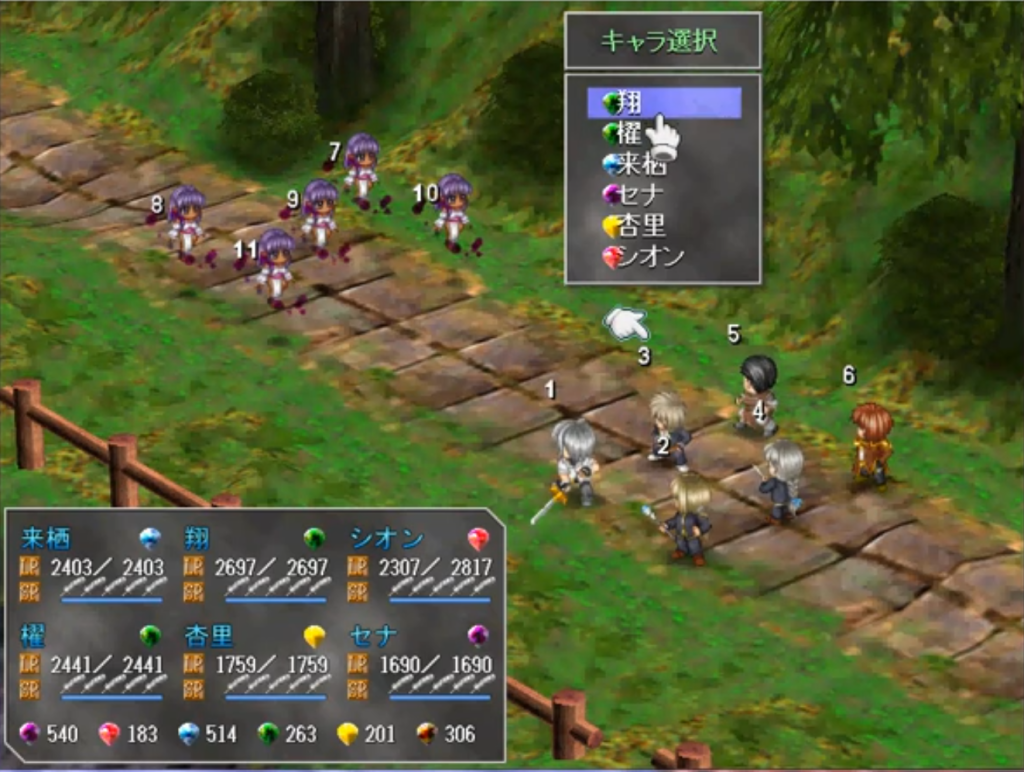
Studio e.go!’s current official page describes Angel’s Feather as a BL adventure RPG and notes that, for a BL game of its time, it was unusual for adopting a full command-selection RPG system. It tried combine BL character relationships with RPG structure, school mystery, and fantasy battle. Even if that system feels dated now, the ambition is part of the point, and to this day, we still don’t have a commercial BL RPG. In a moment when companies like Square Enix are finding renewed value in old-school, command-based RPGs through projects like the Dragon Quest HD-2D remakes, Angel’s Feather feels more localizable now than it might have years ago. Its age is not only a drawback now; it is part of the appeal.
Why They Still Matter
Not every unlocalized BL game needs to be resurrected. But Lamento, Sukisho, Angel’s Feather, and Kichiku Megane represent the very infrastructure that made modern BL gaming possible. They were messy, deeply influential, and distinctly of their time. For a genre built so heavily on memory and longing, finally allowing English-speaking fans to officially hold these lost artifacts would be a milestone worth celebrating.